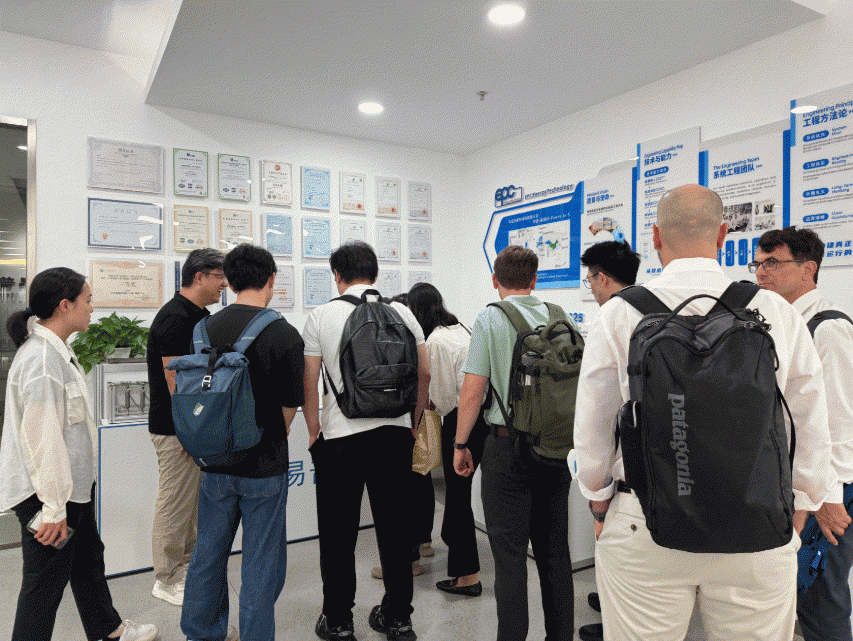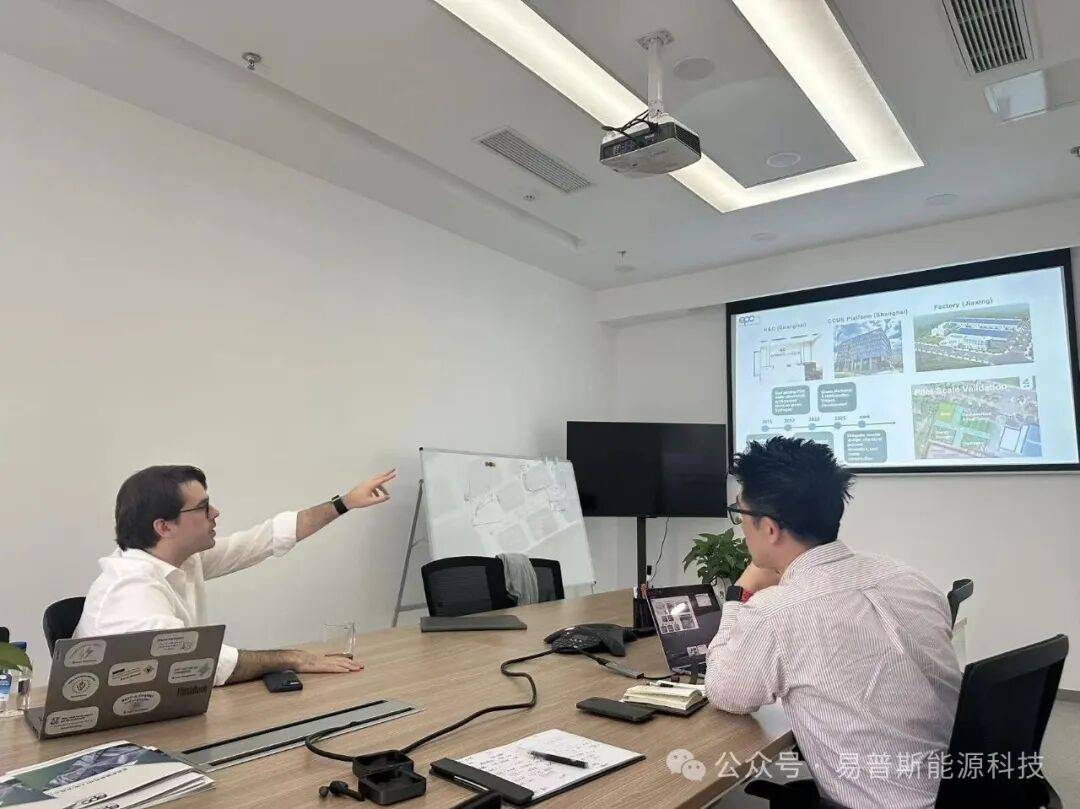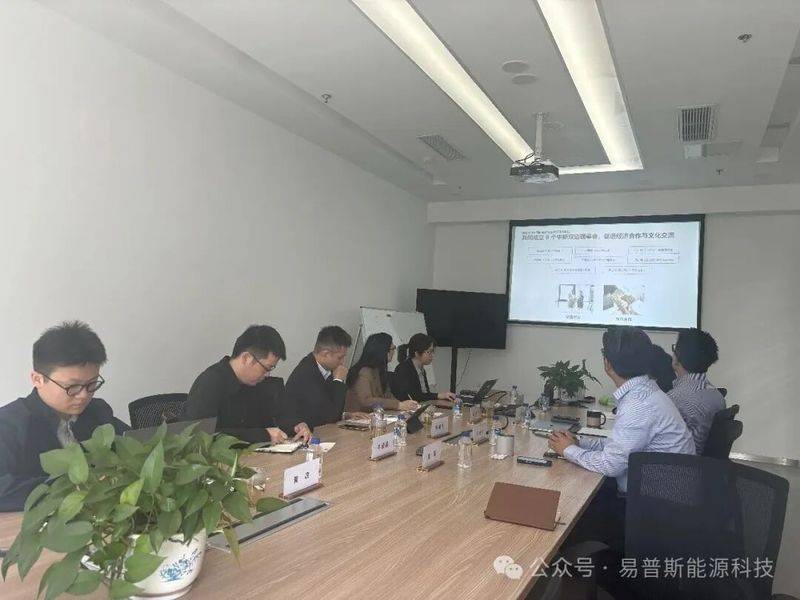

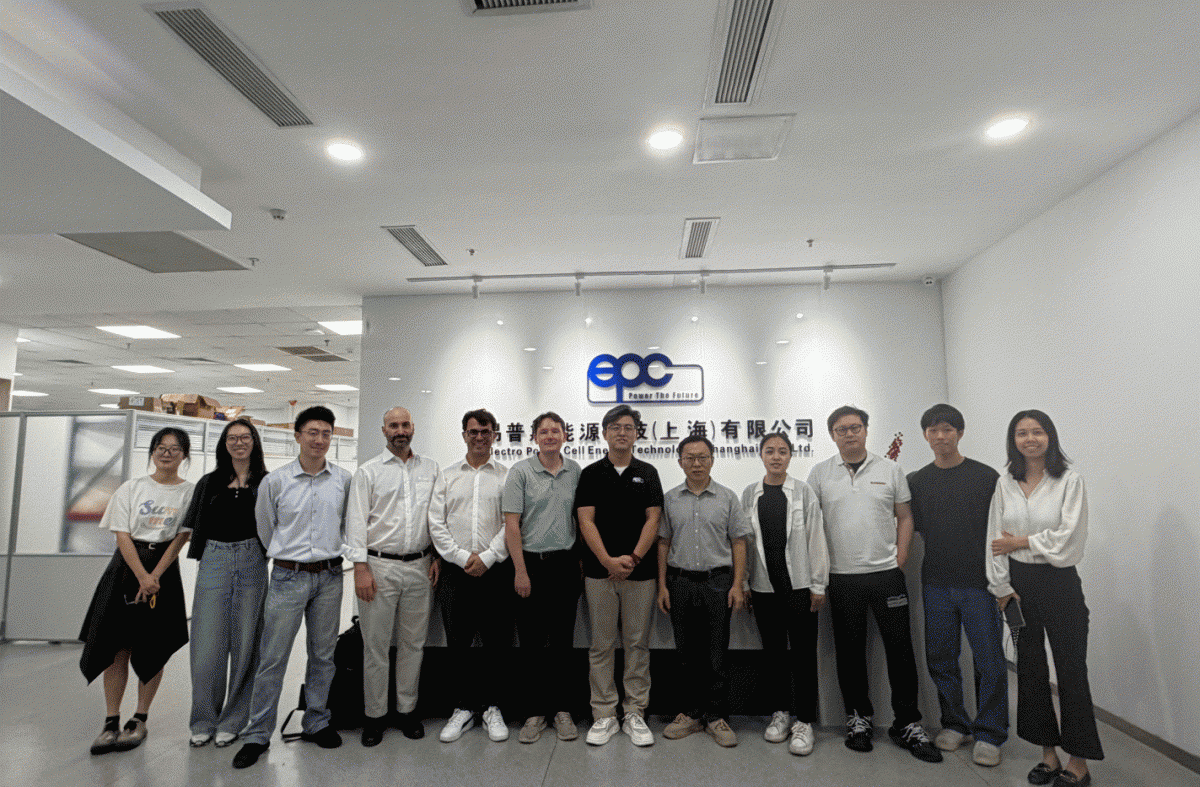
EPC recently welcomed a team from Bosch to its Shanghai facility for a technical visit and exchange focused on electrochemical engineering, hydrogen technologies and Power-to-X systems.
The visit provided an opportunity for both teams to exchange perspectives on the engineering challenges involved in moving emerging electrochemical technologies from laboratory development toward scalable and reliable operation.
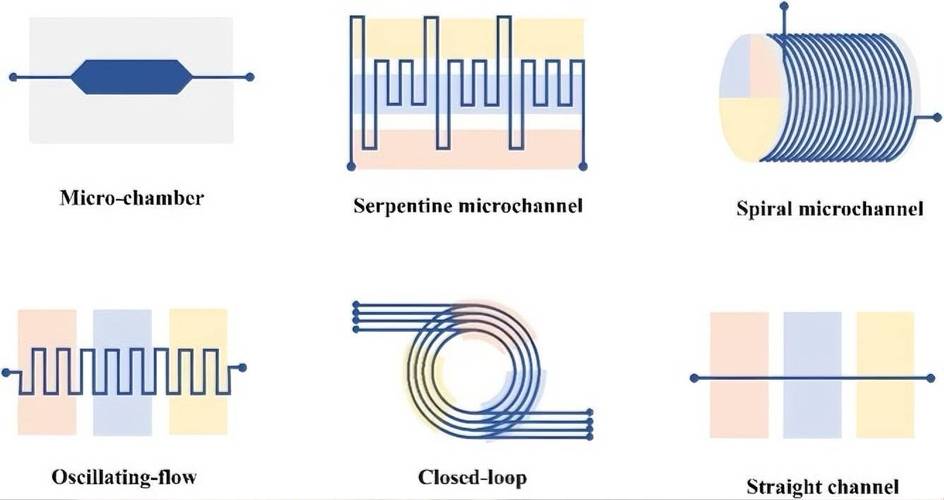
Discussions covered topics including electrolyzer and stack architecture, electrochemical reactor design, testing and validation, fluid and thermal management, system integration, and the engineering requirements behind scale-up.
From Electrochemistry to Engineering
As electrochemical technologies continue to expand into hydrogen production, CO₂ conversion and green fuels, scaling a technology is rarely a simple matter of increasing electrode area or stack power.
Performance at the cell level must ultimately be translated into a complete engineering system capable of operating safely, consistently and under real-world conditions.
This requires coordinated consideration of multiple factors, including:
·Cell and stack architecture
·Materials and component compatibility
·Sealing and pressure management
·Gas and liquid distribution
·Thermal management
·Electrical architecture
·Instrumentation and control
·Testing and validation
·Manufacturability and system integration
During the visit, EPC shared its engineering approach to developing electrochemical hardware across different technology readiness levels — from single cells and short stacks to engineering-scale stacks, test systems and integrated pilot units.
Engineering Across Hydrogen and Carbon Technologies
EPC focuses on the engineering development of electrochemical hardware and modular systems for applications including water electrolysis, CO₂ electrochemical conversion, carbon capture and Power-to-X.
Rather than treating the electrolyzer, reactor or stack as an isolated component, EPC’s engineering work increasingly focuses on the interaction between the core electrochemical device and the surrounding balance-of-plant.
This system-level approach becomes particularly important during scale-up, where fluid distribution, thermal behavior, pressure control, instrumentation and operating strategy can become just as important as the electrochemical performance itself.
The discussions with Bosch reflected many of these practical considerations and provided a valuable opportunity to exchange views on how next-generation electrochemical technologies can be translated into robust engineering solutions.
Looking Ahead
We appreciate the Bosch team’s visit to EPC Shanghai and the open and constructive technical discussions.
For EPC, exchanges with industrial and research partners are an important part of understanding how emerging technologies can be designed, validated and ultimately deployed beyond the laboratory.
From electrochemical hardware to integrated Power-to-X systems, industrialization starts with engineering the details.